If you’ve moved past your first kit and you’re now managing a 5- or 6-gallon batch from crush to bottle, you’ve probably had the moment: fermentation is done, the wine needs to rest for weeks or months, and you’re staring at your vessel wondering whether it’s actually protecting what’s inside. A carboy — a large, narrow-necked jug used to store wine in bulk after fermentation — is the workhorse of home winemaking. The two most common materials are glass and PET plastic (a food-safe, rigid plastic also called polyethylene terephthalate). The choice between them isn’t just about cost or convenience. It directly affects headspace management (how much air sits above your wine) and oxidation risk (how much oxygen reaches your wine over time, potentially browning it or flattening its flavor). This article breaks down the real differences so you can buy with confidence rather than guesswork.
| EDITOR'S PICK[FastRack 5 Gallon Italian Glass](https://www.amazon.com/dp/B00SJ05TJ0?tag=greenflower20-20)… | Mid-tier[FastRack 6 Gallon Carboy (PET)](https://www.amazon.com/dp/B07115V5NB?tag=greenflower20-20)… | Budget pick[FastRack 3 Gallon PET Wide Mout](https://www.amazon.com/dp/B07BQ7JTDJ?tag=greenflower20-20)… | |
|---|---|---|---|
| Capacity | 5 Gal | 6 Gal | 3 Gal |
| Material | Glass | PET Plastic | PET Plastic |
| BPA-Free | — | ✓ | ✓ |
| Stopper Included | ✗ | — | ✓ |
| Airlock Included | — | — | ✓ |
| Price | $73.29 | $38.24 | $36.79 |
| See on Amazon → | See on Amazon → | See on Amazon → |
Why Headspace and Oxygen Permeability Are the Two Numbers That Actually Matter
Once primary fermentation is complete and the protective blanket of CO₂ gas has dissipated, your wine becomes vulnerable. The enemy is molecular oxygen — not in dramatic splashes, but in the slow, invisible diffusion that happens through vessel walls, around stoppers, and across the surface of any unfilled space.
Headspace is the gap between the surface of your wine and the bottom of your stopper. Every home winemaker has heard the rule: minimize it. But why it matters is worth unpacking. The MoreWine! Winemaking Reference Manual (MoreWineMaking.com) notes that even a small headspace of one to two inches in a 6-gallon carboy represents a significant oxygen reservoir — enough to measurably degrade free SO₂ levels and begin oxidative browning in a matter of weeks without corrective topping up.
Oxygen transmission rate (OTR) is the second variable. This is how much oxygen permeates through the vessel walls themselves over time, independent of headspace. It is expressed in units of cc O₂ per container per day. Glass has an OTR of essentially zero — it is molecularly impermeable to gas. Food-grade PET, by contrast, has a measurable OTR, though it varies by wall thickness and exact resin formulation.
The practical implication: a glass carboy isolates your wine from all wall-derived oxygen exposure. A PET carboy does not, though in thicker-walled vessels the rate is low enough that it is rarely catastrophic over a 2–3 month aging window. Where it compounds is over longer bulk aging — 6 months, 12 months, or more — where the cumulative transmission adds up.
Penn State Extension’s Home Winemaking Basics guidance (extension.psu.edu) consistently emphasizes that free SO₂ management and headspace control work in tandem: you cannot compensate for structural oxygen ingress with sulfite additions alone if the vessel is a chronic low-level oxygen source.
Comparing Your Options: Glass, Standard PET, and Thick-Wall PET
The following three sections examine each vessel category honestly, covering where each earns its place and where it falls short. Each section closes with a tier marker so you can match your situation to the right starting point.
Glass Carboys: The Benchmark for Inert Aging
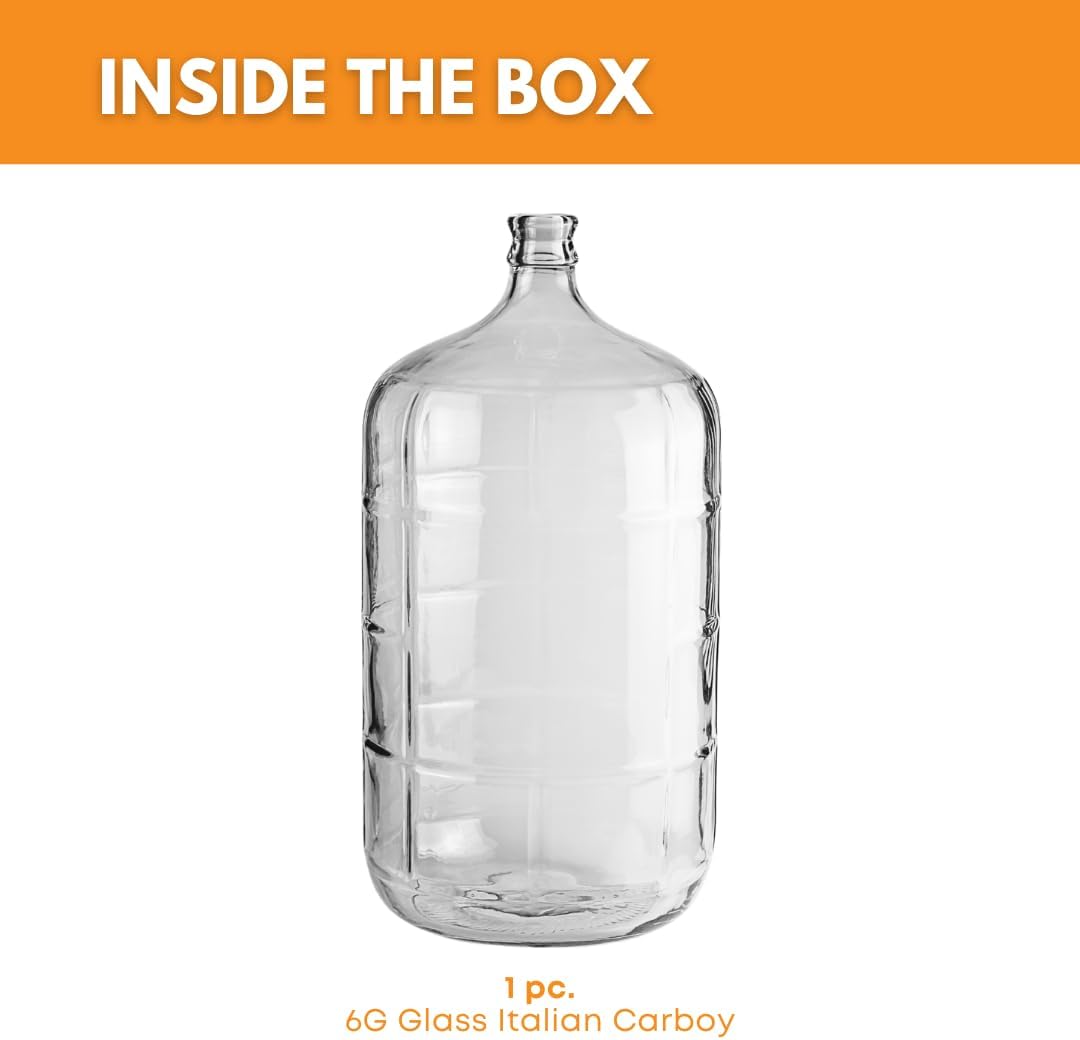
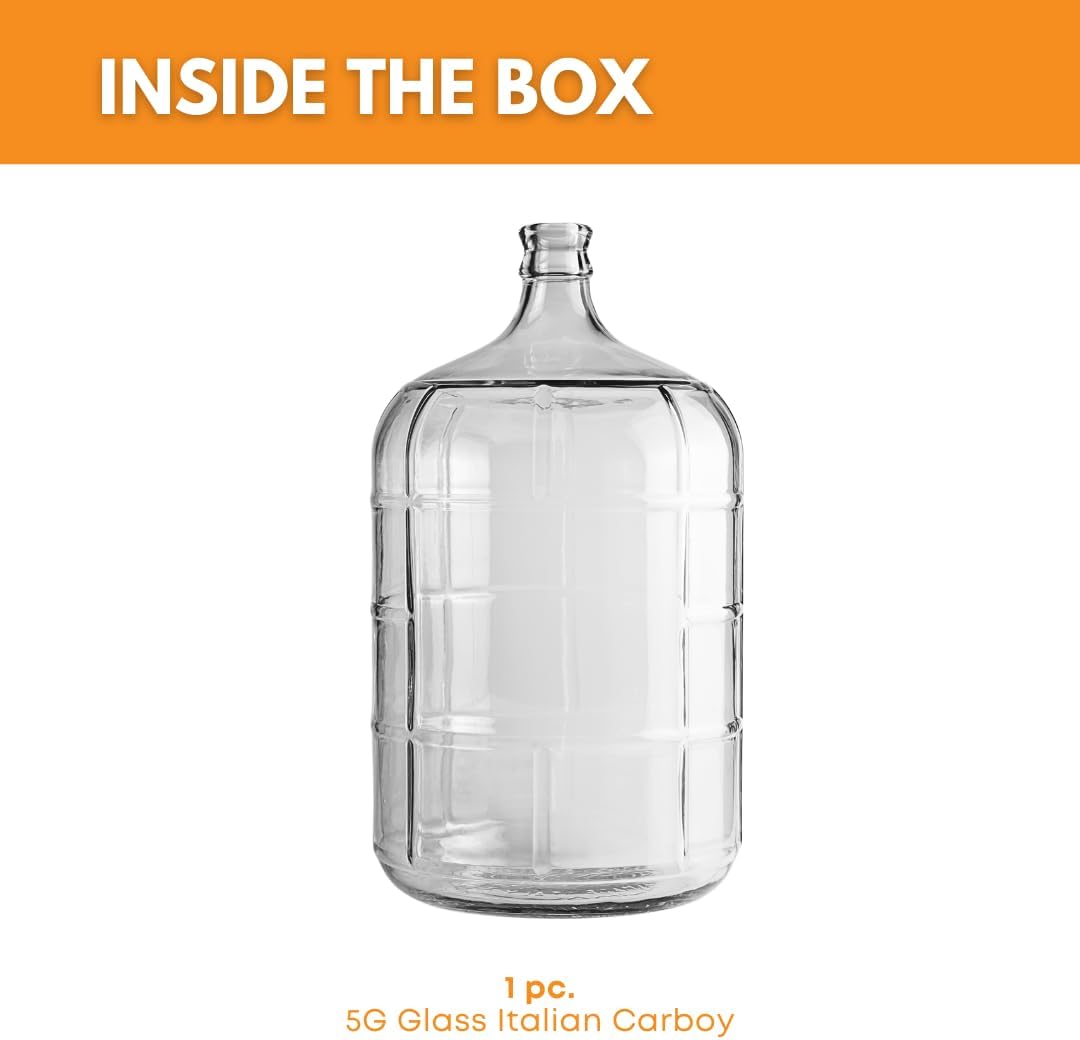
Glass has been the default for intermediate-to-advanced home winemakers for decades, and for good reason. Its strengths are straightforward.
Zero oxygen transmission. Full stop. The MoreWine! Winemaking Reference Manual and UC Davis Department of Viticulture and Enology materials (waterhouse.ucdavis.edu) both treat glass as the reference standard when discussing inert bulk aging. If your wine is properly sulfited, topped up, and bunged with an airlock in glass, wall-derived oxygen is simply not a variable you need to manage.
Chemical inertness. Glass does not interact with wine at any detectable level. No flavor compounds leach from the material; no surface degradation occurs with repeated use and proper cleaning. Owners consistently report vessels lasting decades with routine care.
Transparency. You can see your wine. This matters more than it sounds. Visual inspection — watching for sediment formation, color shifts, or unexpected turbidity — is a core diagnostic tool. With glass, you get that assessment for free at every glance.
The trade-offs are real, though. Glass is heavy. A filled 6-gallon glass carboy weighs approximately 55–60 pounds. Breakage risk is not hypothetical: glass shatters, and a dropped carboy represents both a safety hazard and a total batch loss. Glass also has essentially no flex. In the event of a fermentation restart — a stuck fermentation that suddenly reactivates under a tight bung — the pressure dynamics are less forgiving than in a slightly flexible plastic vessel.
Best for: Extended bulk aging, red wines held 4–12 months before bottling, any batch where long-term inertness is the priority and the vessel will not be moved frequently.
FastRack
$73.29
In stock on Amazon
Check price on AmazonStandard Thin-Wall PET Carboys: The Lightweight Entry Point
PET plastic carboys — sold under names like Better Bottle or as generic food-grade vessels — occupy a genuine middle ground that deserves honest evaluation rather than reflexive dismissal.
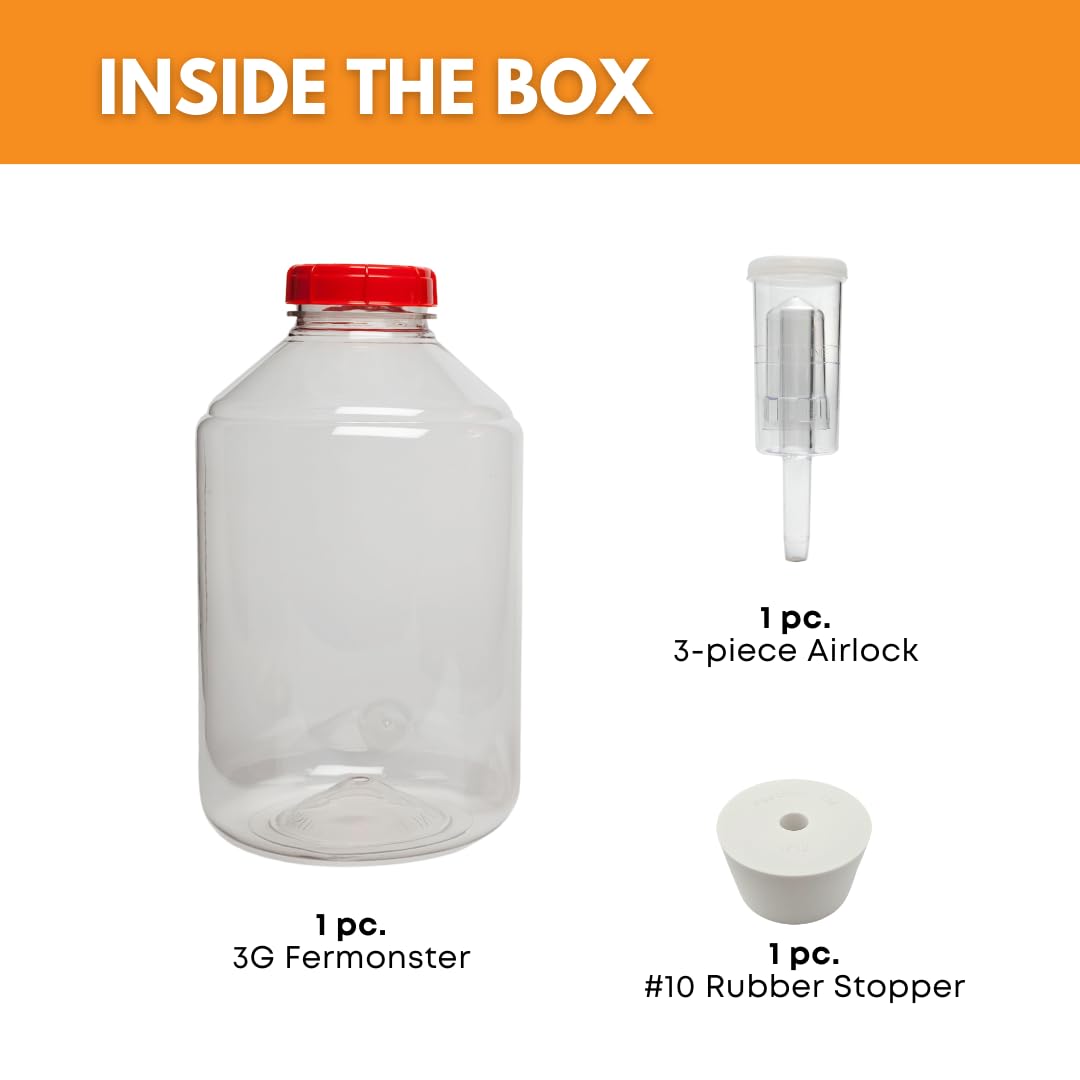
Weight is the most obvious advantage. A filled PET 6-gallon carboy runs 27–32 pounds depending on wall thickness — a meaningful difference when you’re moving vessels solo or managing a cellar with multiple carboys racked frequently. Breakage risk drops dramatically; a dropped thin-wall PET carboy may crack or deform but rarely shatters catastrophically, making it the safer choice for winemakers working alone on stairs or in confined spaces.
The oxygen transmission problem is real — and context-dependent. BSG HandCraft vessel documentation (bsghandcraft.com) and Winemaker Magazine (winemakermag.com) both acknowledge that PET’s OTR, while low, is not zero. For a 4–6 week aging window — say, a white wine you’re moving quickly to bottle — the cumulative oxygen exposure is genuinely minimal and unlikely to affect wine quality if SO₂ levels are properly maintained.
The calculus changes for longer bulk aging. If you’re holding a red wine in bulk for 8–12 months, the slow continuous oxygen transmission through thin-wall PET becomes a legitimate variable. The MoreWine! Winemaking Reference Manual’s discussion of inert vessel selection recommends glass or stainless steel for extended bulk aging precisely because of this cumulative effect.
Scratching is the other issue. PET scratches more easily than glass, and scratches provide harboring sites for spoilage organisms — specifically acetobacter and brettanomyces — that are difficult to sanitize completely. Budget for replacement every 2–4 seasons depending on use intensity.
Best for: Primary fermentation vessels that are handled frequently, short-aging whites and rosés with a 60–90 day cellar window, budget-conscious setups running 4–6 carboys simultaneously.
FastRack
$36.79
In stock on Amazon
Check price on AmazonThick-Wall PET Carboys: The Middle Path
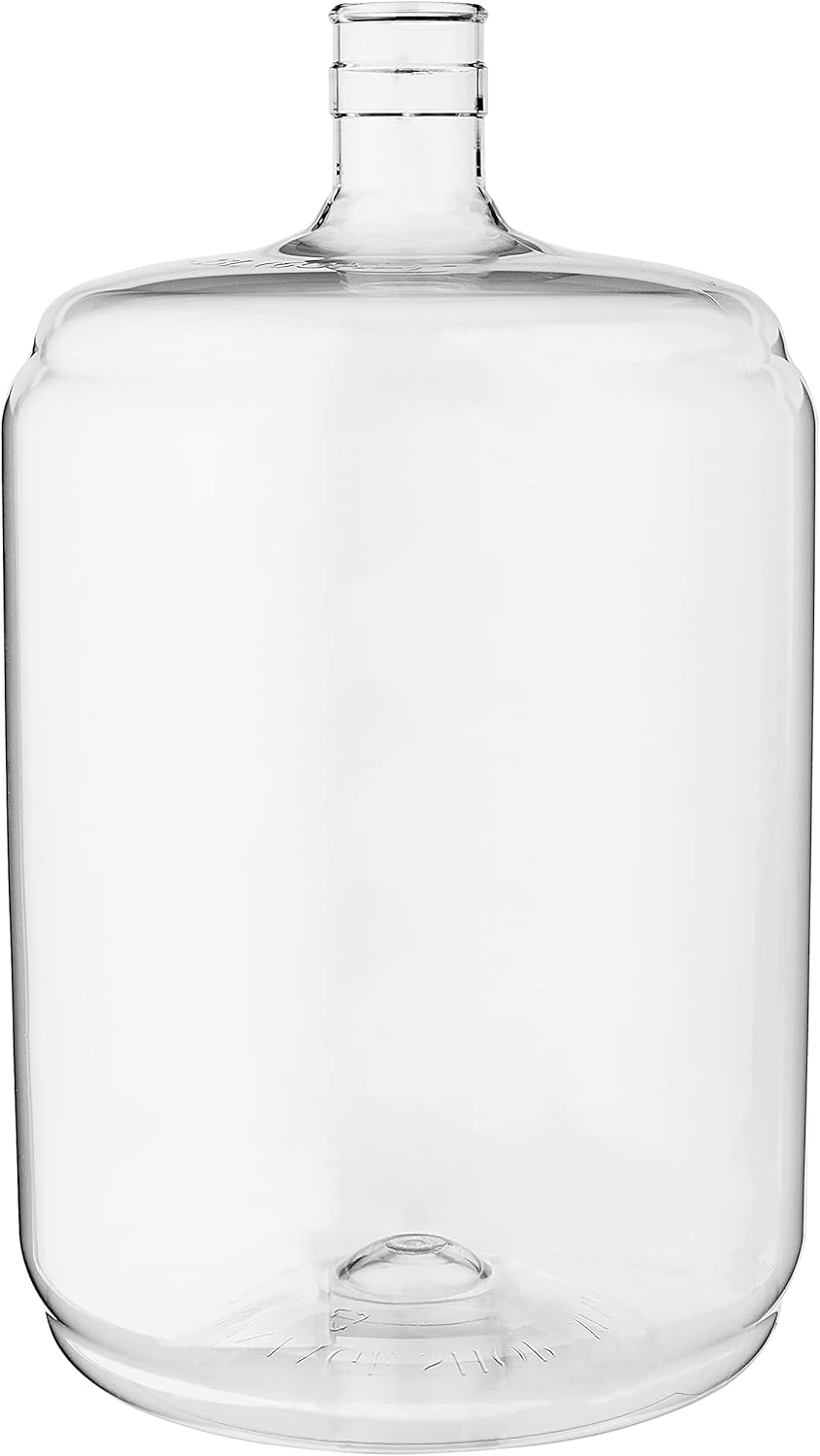
Thick-wall PET carboys — typically those with wall dimensions meaningfully above standard consumer-grade vessels — offer a genuine improvement in OTR performance over thin-wall PET while retaining most of the weight and breakage advantages of plastic.
BSG HandCraft vessel documentation notes that wall thickness is the primary driver of OTR variance within the PET category. A thick-wall vessel can reduce oxygen transmission by 50–70 percent compared to a standard thin-wall carboy of the same volume, bringing the cumulative 90-day oxygen exposure significantly closer to glass performance — though not equal to it.
The trade-off is cost and, marginally, weight. Thick-wall PET carboys typically price 25–40 percent higher than their thin-wall equivalents and run 3–5 pounds heavier filled. They still scratch and still have a finite service life, so the replacement calculus still applies. But for a winemaker aging a batch 3–6 months in a climate-controlled space, thick-wall PET occupies a defensible middle ground.
Winemaker Magazine’s published vessel comparisons have noted this tier as a reasonable compromise for winemakers who want plastic’s safety advantages during frequent racking but aren’t ready to commit to the full investment of stainless variable-capacity tanks.
Best for: Medium-duration aging (90–180 days), winemakers managing multiple carboys who need the weight reduction, transitional cellars moving from beginner to intermediate scale.
FastRack PET
$38.24
In stock on Amazon
Check price on AmazonThe Decision Framework: Matching Vessel to Batch Duration and Wine Style
Here’s where the logic becomes concrete.
If you’re aging whites or rosés for 60–90 days before bottling, and you’re actively topping up and managing SO₂ on schedule, a standard PET carboy is a defensible choice. The OTR over that window is low, the weight savings are real, and the price point is attractive for someone running 4–6 carboys simultaneously.
If you’re bulk aging any red wine beyond 4–5 months, glass is the correct vessel based on published specifications and the enological guidance from UC Davis Department of Viticulture and Enology and the MoreWine! Winemaking Reference Manual. The cumulative oxygen exposure in thin-wall PET over that window is not theoretical — it’s the kind of slow degradation that produces a wine that tastes flat or oxidized at bottling and is difficult to diagnose after the fact.
If you’re running a larger operation — 30, 60, or 100+ gallon batches — neither glass nor PET is the right answer at scale. Variable-capacity stainless tanks (commonly associated with brands like Speidel and Marchisio) solve the headspace problem architecturally: the floating lid or variable-volume design means there is no meaningful headspace regardless of fill level, and OTR is effectively zero. The capital cost is real — expect to invest substantially more than carboy pricing — but for a prosumer or micro-commercial winemaker making 50+ gallons per season, the one-time investment eventually outperforms the recurring cost of vessel replacement and the management overhead of headspace topping.
If you’re concerned about breakage — you’re working alone, your cellar has stairs, you’re managing 8–10 carboys — a mixed fleet makes practical sense. Use PET for primary fermentation where the vessel is handled frequently and headspace is managed by active CO₂ production anyway. Move to glass for secondary and extended bulk aging where inertness matters most.
SO₂ Management: The Chemistry That Works With (or Against) Your Vessel
No discussion of vessel choice is complete without the chemistry piece. Winemaker Magazine and the MoreWine! Winemaking Reference Manual both emphasize that free SO₂ targets — typically 25–35 ppm for most wines at standard cellar pH — need to be tested and adjusted more frequently in any vessel with non-zero OTR.
Penn State Extension’s Home Winemaking Basics guidance reinforces this: the vessel choice and the chemistry discipline are not separate decisions. If you’re using PET and you’re not testing SO₂ every 4–6 weeks with a Titrets kit or a simple aeration-oxidation titration setup, you are managing your wine blind. The vessel creates the environment; the sulfite monitoring is how you know whether that environment is still protective.
UC Davis Department of Viticulture and Enology materials on wine oxidation further clarify that free SO₂ depletion accelerates in proportion to oxygen exposure — meaning a PET vessel that contributes even a modest continuous OTR will consume SO₂ faster than the equivalent glass vessel, requiring more frequent additions to maintain the same protective threshold.
Quick-Reference Vessel Comparison
| Vessel Type | Approx. OTR | Filled Weight (6 gal) | Relative Price | Best Aging Window |
|---|---|---|---|---|
| Glass carboy | ~0 cc O₂/day | 55–60 lbs | Mid | Unlimited |
| Thin-wall PET | Low-moderate | 27–32 lbs | Budget | Under 90 days |
| Thick-wall PET | Low | 30–36 lbs | Mid | 90–180 days |
| Variable-capacity stainless | ~0 cc O₂/day | Equipment-dependent | Premium | Unlimited |
OTR characterizations based on food-grade PET materials data referenced in BSG HandCraft vessel documentation and UC Davis enology literature. Glass OTR is effectively zero per published enological standards.
Bottom Line
The glass-versus-PET question has a real answer, and it depends almost entirely on how long the wine will live in that vessel:
- Short aging under 90 days, high-turnover cellar, budget-conscious setup: Standard PET is a reasonable choice with active SO₂ monitoring and a replacement schedule.
- Medium aging 90–180 days, frequent racking, safety-conscious cellar: Thick-wall PET earns its place as the honest middle ground.
- Extended bulk aging beyond 4–5 months, serious red wines, any batch representing significant time investment: Glass is the correct vessel based on every specification and every piece of published enological guidance available.
- Scale beyond 6-gallon batches or a production mindset: Variable-capacity stainless is where the math eventually points.
What the spec sheets and professional winemaking literature agree on is this: headspace and oxygen ingress are not problems you solve once at the point of purchase. They are ongoing management decisions that your vessel either helps or hinders. Choosing the right container for the right duration is the first and cheapest form of oxidation insurance available to any home winemaker.