Hand Corker vs. Floor Corker: The Durability Gap That Matters When You’re Bottling 30 Bottles at Once
Bottling day should feel like a reward — the satisfying final step after months of patience, racking, and tasting. But if you’ve ever corked two or three dozen bottles with the wrong tool, you already know it can turn into a sore-wrist ordeal. A corker is simply the device that compresses a cylindrical cork and drives it flush into the neck of a wine bottle. There are two common types available to home and small-craft winemakers: the hand (or double-lever) corker, a compact tool you press down with both palms, and the floor corker (also called a standing corker or Portuguese corker), a floor-standing unit you operate with a single downward pull of a long handle. The difference sounds modest. When you’re standing in front of 30, 60, or 120 bottles, it isn’t.
This guide walks through what separates these two tools on specs, ergonomics, cork compatibility, durability, and price — and ends with a clear decision rule for wherever you are in your winemaking journey.
What You’re Actually Comparing (And Why “Cheap vs. Expensive” Misses the Point)
Most people frame this as a budget decision. That framing is understandable — hand corkers typically run $15–$45, while entry-level floor corkers start around $80–$120 and mid-range Portuguese-style floor corkers land in the $150–$350 range. But the price gap isn’t the real story. The real story is a combination of mechanical leverage, cork compression consistency, and cumulative fatigue.
Hand (double-lever) corkers work by squeezing two levers together around the cork, which compresses it radially, then you push down to seat it. The force required comes entirely from your hands and arms. These tools are typically calibrated for standard #9 corks (approximately 24 mm diameter). Getting a tight seal with longer, denser corks — the kind you’d use for a wine you plan to age five or more years — requires noticeably more effort, and owners consistently report hand fatigue by bottle 20–25 in a single session, a pattern reflected in product feedback documented on MoreWine! Winemaking Supplies’ corker product pages.
Floor corkers use a column-mounted lever arm and a plunger mechanism. You set the bottle on a platform — some models include a height-adjustable base to fit both standard 750 mL Bordeaux and Burgundy-style bottles — place the cork in the jaw, and pull the handle down. The leverage ratio does most of the work for you. Winemaker Magazine’s equipment review coverage of bottling and corking tools notes that well-built floor corkers seat corks with consistent, repeatable depth regardless of operator strength, which matters both for seal integrity and for label aesthetics when bottles are displayed.
The Durability Gap, By the Numbers
This is where the comparison gets concrete. Here’s a quick reference for what separates the typical tool in each tier:
| Spec | Hand (Double-Lever) | Floor Corker (Entry–Mid) |
|---|---|---|
| Typical price range | $15–$45 | $80–$350 |
| Ergonomic breaking point | ~20–30 bottles per session | 100+ bottles with minimal fatigue |
| Cork size compatibility | Standard #8–#9 | #7–#9, often #10 with adjustment |
| Consistent insertion depth? | Variable (operator-dependent) | Yes (fixed plunger stop) |
| Cast iron / steel construction? | Rarely; usually aluminum or plastic | Common on mid-range and above |
The durability gap shows up in two places. First, mechanical wear: hand corkers have fewer moving parts, but those parts — particularly the jaw springs and the hinge pins — are under high lateral stress every single use. Across product documentation and selection guidance published by MoreWine! Winemaking Supplies and BSG Handcraft’s bottling and corking equipment category pages, the pattern is consistent: hand corkers used for batches of 30 or more bottles multiple times per season see jaw misalignment or spring fatigue within one to three years of regular use. Floor corkers, especially those with cast-iron or heavy-gauge steel construction, routinely last a decade or more with basic maintenance — keeping the jaws clean and lightly lubricated.
Second, consistency under fatigue: as your hands tire on a hand corker, you apply force unevenly, and corks seat at slightly different depths. A cork that sits 2–3 mm too high is more likely to weep or push out during temperature fluctuations. One that seats too deep can be nearly impossible to extract without damaging the cork. The UC Davis Department of Viticulture and Enology’s home winemaking materials identify cork seating consistency as directly related to long-term oxidation risk — which, if you’ve spent any time managing headspace and sulfite additions, you already know is the central enemy of a well-cellared wine.
Three Tool Tiers: Where Each Corker Fits and Where It Breaks Down
Budget Tier: The Hand (Double-Lever) Corker
The hand corker earns its place in any honest equipment guide. At $15–$45, it is the right tool in specific, narrow circumstances: batches of 12–24 bottles, once or twice a year, using standard #9 synthetic or natural corks. Storage and budget are real constraints for many home winemakers, and hand corkers are compact, lightweight, and easy to store between sessions.
If you’re in the curious-beginner phase and you’ve just finished your first 6-gallon carboy batch — roughly 30 bottles — a hand corker gets you across the finish line without a large investment. The wrist fatigue is real but manageable at that scale.
Where the hand corker breaks down: batches larger than 24–30 bottles in a single session, denser natural corks (45 mm or 49 mm) intended for age-worthy reds, or any situation where you’re running two or three separate batches per season. At that point, fatigue compounds across sessions, and seal consistency begins to suffer before you finish the first case. MoreWine! Winemaking Supplies’ selection guidance specifically flags this as the transition point where the floor corker becomes the correct tool.
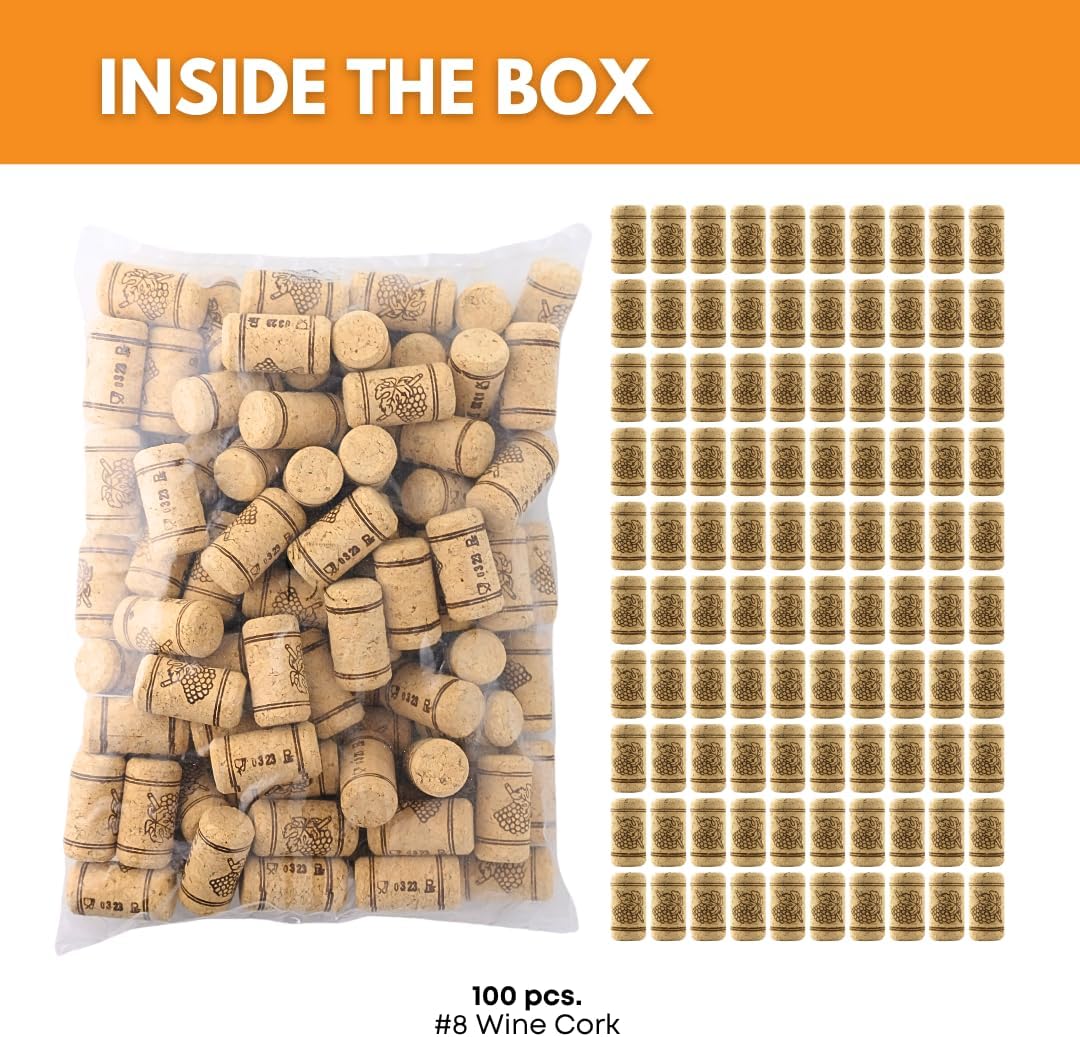
FastRack
$18.58
In stock on Amazon
Check price on AmazonMid-Tier: The Entry-Level Portuguese-Style Floor Corker
Floor corkers in the $80–$150 range represent the most significant value leap in this category. These are column-mounted, lever-operated units — the style most often called a “Portuguese corker” in the home winemaking supply trade — and they change the bottling experience fundamentally. The lever mechanism redistributes the compression work across your entire arm and shoulder rather than concentrating it in your grip and wrist.
At this tier, you get a fixed plunger stop (ensuring consistent cork depth across an entire batch), jaw compatibility with #8 and #9 corks, and steel or aluminum construction that holds up for several seasons of moderate use. BSG Handcraft’s bottling and corking equipment category documentation places entry-level Portuguese floor corkers in this range and notes their suitability for home winemakers bottling two to ten cases per session.
The limitation at this price point: jaw adjustment for non-standard cork sizes may be limited, and bottle platform height may not accommodate the full range of Burgundy-style bottle profiles without shimming. For most home winemakers producing 30–60 bottles per session, those are acceptable tradeoffs.
Penn State Extension’s small-scale winery equipment guidance identifies this volume range — two to five cases per session — as the inflection point where mechanical lever assist pays clear dividends in both seal quality and operator endurance, making the mid-tier floor corker the logical first upgrade for any winemaker who has outgrown a hand tool.
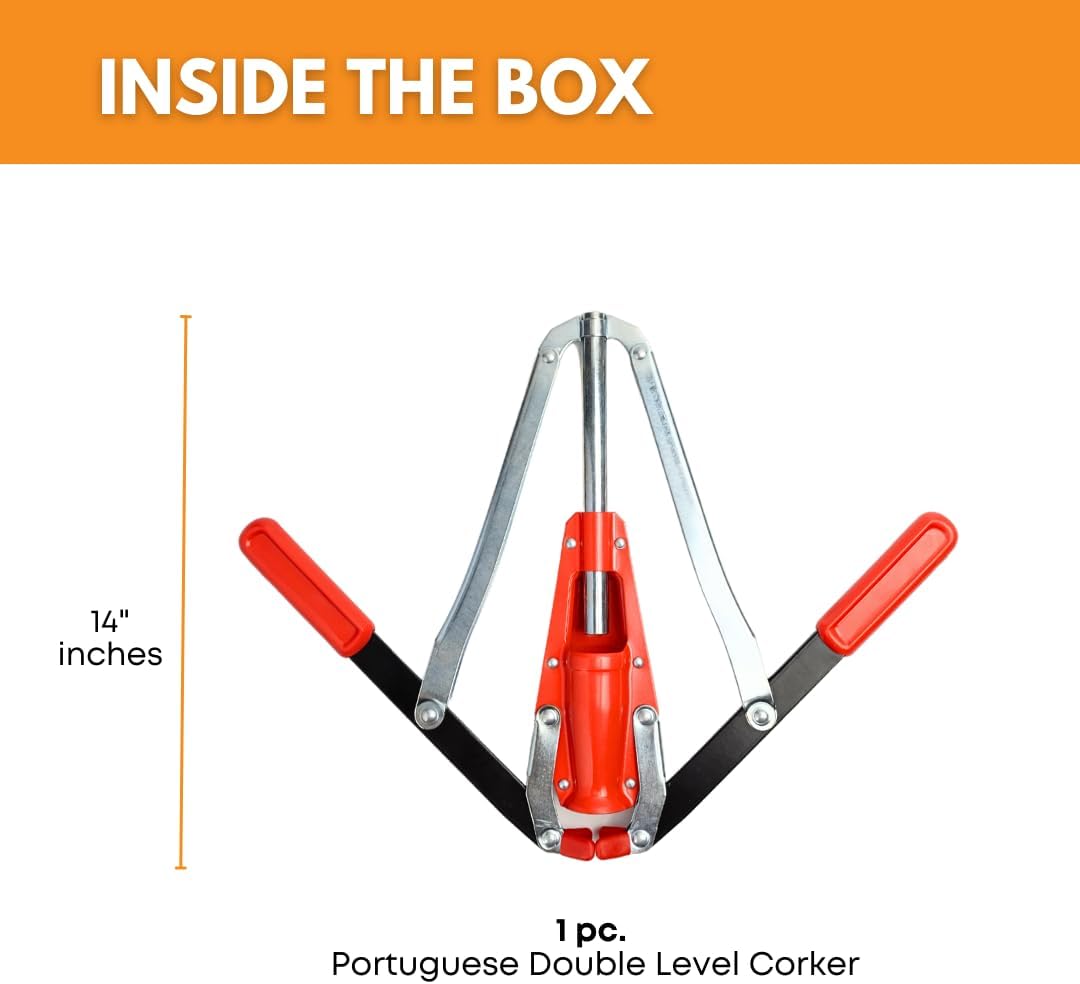
Portuguese
$20.95
In stock on Amazon
Check price on AmazonPremium Tier: Cast-Iron Floor Corkers for Serious Production
Mid-range floor corkers in the $150–$350 range step up to cast-iron or heavy-gauge steel construction, adjustable bottle platforms that accommodate both Bordeaux and Burgundy profiles, and jaw systems that handle #7 through #10 corks without modification. At this tier, the tool is built for multi-decade service life with routine maintenance — cleaning the jaws after each session and applying a light food-safe lubricant to the pivot and plunger mechanism.
This is the appropriate choice when you’re bottling 60–120 or more bottles per session, when you’re sourcing premium natural corks from a quality supplier (the kind where a mis-seated or cracked cork represents a meaningful loss), or when the corker is a shared tool in a winemaking club or small farm winery context. Shared-tool economics favor the premium tier strongly: spread across four or five users over a ten-year lifespan, a $250 cast-iron floor corker costs less per session than replacing two or three failed hand corkers.
Winemaker Magazine’s bottling equipment coverage consistently positions this tier as the ceiling for serious home producers and the floor for small farm winery operations. Above this level — semi-automatic and pneumatic corkers starting at $800 or more — the cost is justified only at production volumes exceeding 300–500 bottles per session, which is outside the scope of most home and small-craft operations.
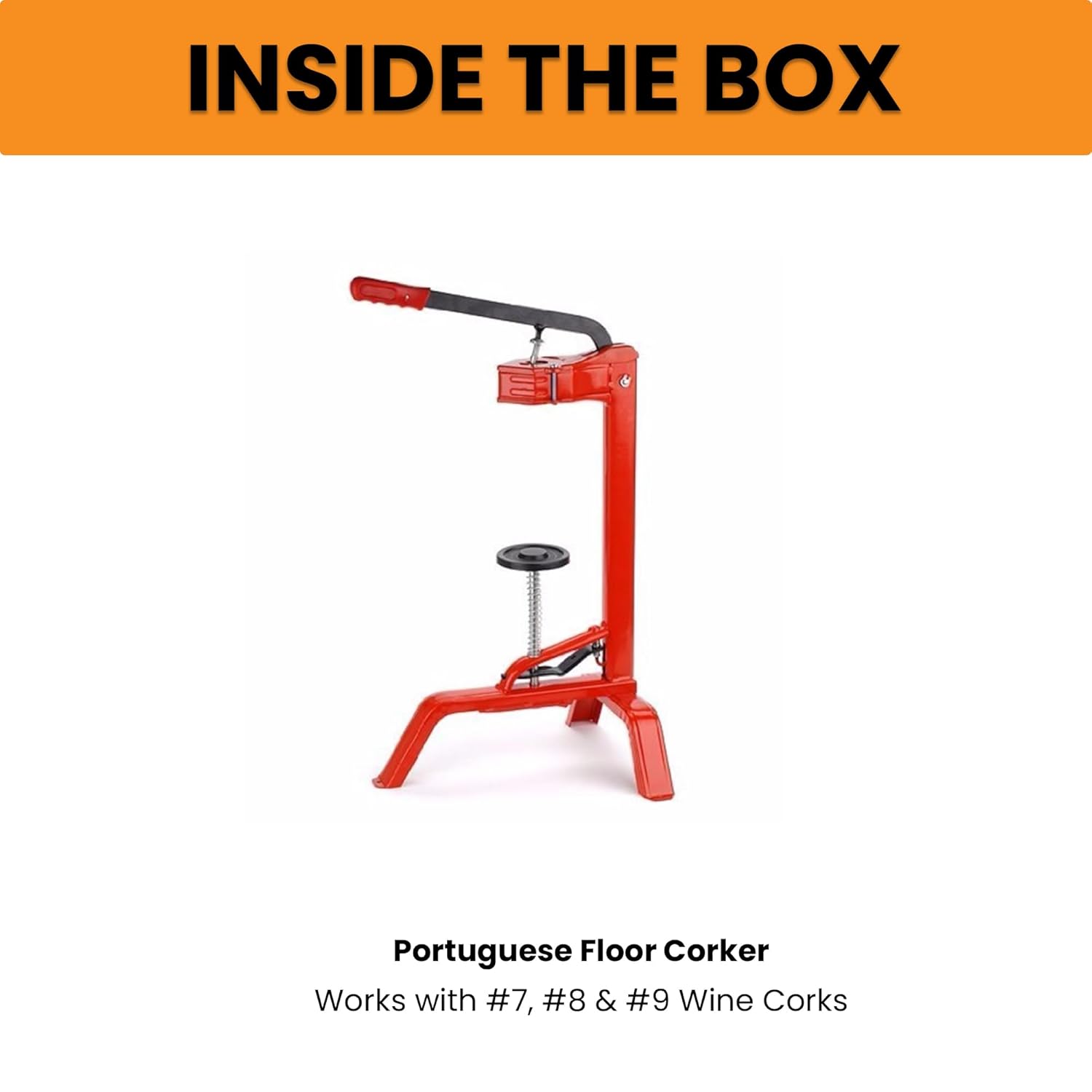
FastRack
$92.49
In stock on Amazon
Check price on AmazonThe Upgrade Decision Frame: If X, Then Y
Here’s the decision rule distilled from everything above. Apply the first match.
If you bottle fewer than 24 bottles per season, total: A hand corker is adequate. Spend the savings on better corks or a second carboy.
If you bottle 25–60 bottles per session, or you run two or more separate batches per season: Buy an entry-level floor corker. The Portuguese-style models in the $80–$130 range are meaningfully better than any hand corker at this scale, and Penn State Extension’s small-scale equipment guidance supports this threshold as the mechanical-assist break-even point.
If you’re bottling 60–120+ bottles per session, or operating as a small farm winery: Move up to a cast-iron floor corker in the $150–$350 range. At this volume, jaw fatigue on lighter-duty models becomes a real factor, and the cost-per-use math over five to ten years strongly favors the durable option.
If you’re evaluating semi-automatic or pneumatic corkers: That is a separate category — typically $800 and above — justified only at production volumes above 300–500 bottles per session.
One Thing Both Tools Get Wrong (And How to Fix It)
Regardless of which corker you buy, the single most common bottling-day failure isn’t the corker — it’s dry corks. Natural corks should be briefly moistened before insertion. Manufacturer guidance varies: some recommend a short soak of several minutes, others a light mist from a spray bottle. Dry corks require significantly more force to compress and seat, which strains hand corkers and the operator alike. They are also more likely to crack or crumble at the edges, which introduces contamination risk.
Synthetic corks don’t need soaking — one reason some winemakers prefer them for shorter-term wines. But for reds you plan to age three or more years, the UC Davis Department of Viticulture and Enology’s home winemaking materials still favor quality natural corks for their micro-oxygenation properties, which means moistening is part of the correct protocol. Skipping it is the step that most reliably turns an otherwise well-executed bottling session into a frustrating one.
The Bottom Line
The hand corker versus floor corker decision isn’t really about price. It’s about whether your bottling session is an occasional low-volume task or a meaningful production step that recurs throughout your season. At 12–20 bottles, a hand corker is adequate. At 30 bottles — particularly if you’re doing it more than once a year, or if you’re working with the denser, longer natural corks that quality wine deserves — the floor corker is the right tool. The durability gap, the ergonomic gap, and the consistency-of-seal gap all point the same direction once you cross that threshold. Buy the floor corker before your wrists make the decision for you.